

Supermarket Digitalisation: 10 Processes Still Managed on Paper
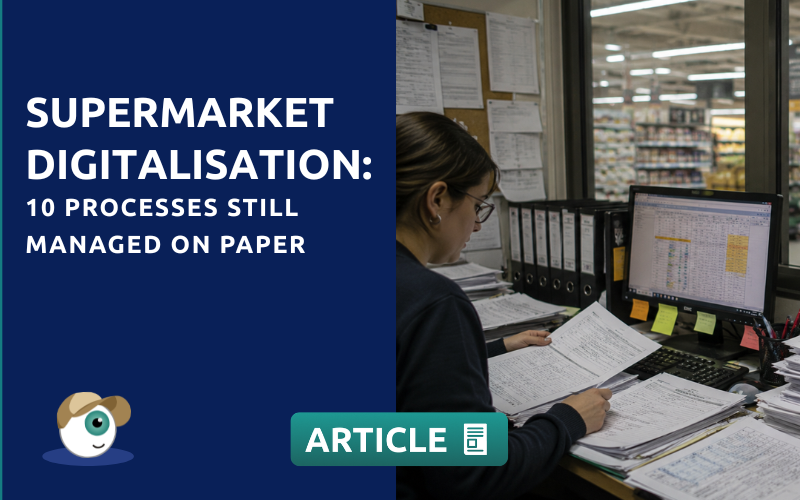
Supermarket digitalisation has become a priority for retail chains looking to improve operational efficiency, reduce errors and ensure compliance with food safety standards.
However, despite the technological advances of recent years, many supermarket processes still rely on paper. Temperature checks, audits, cleaning records and incident tracking continue to be managed manually in many stores.
The problem goes beyond paper consumption. These processes reduce visibility, increase the risk of errors and limit the ability to monitor operations in real time.
Let’s explore ten areas where supermarket digitalisation can deliver immediate improvements.

10 supermarket processes that still depend on paper
1. Temperature checks
Temperature records for cold rooms, freezers and display units are still among the processes most frequently managed on paper.
When information is recorded manually:
- Checks may be forgotten.
- Data is difficult to review.
- Incidents are often detected too late.
Digitalisation makes it possible to centralise records and generate alerts when deviations occur.
2. Operational audits in supermarkets
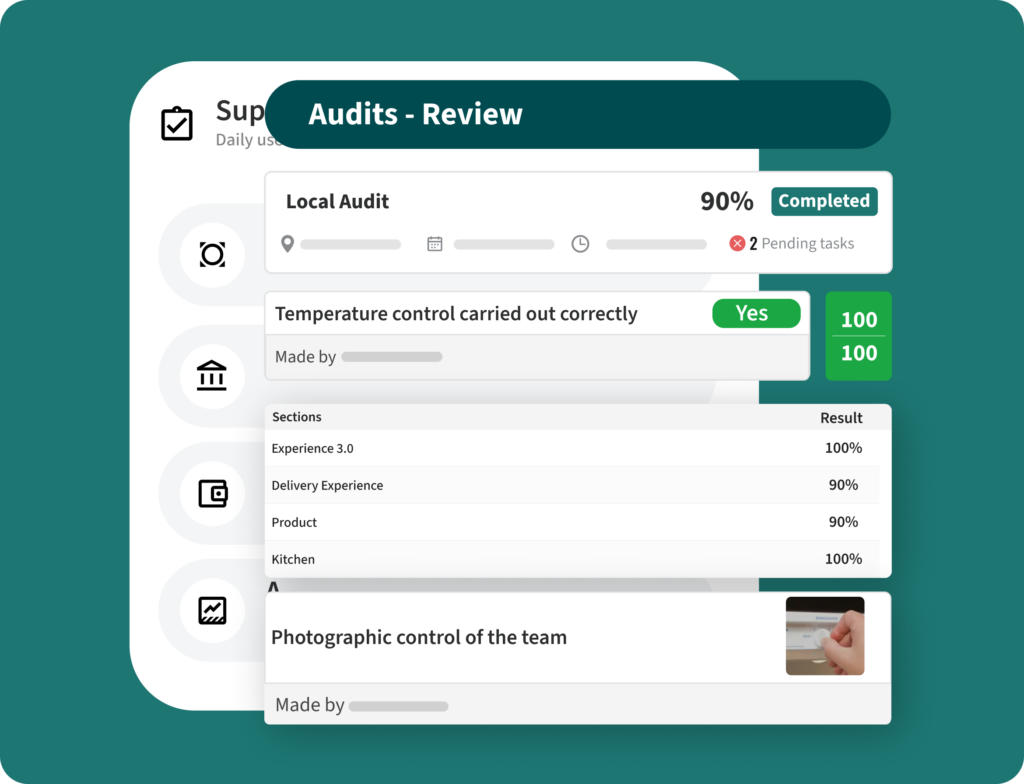
Many audits are still carried out using printed forms that later need to be filed or transcribed.
This makes it harder to:
- Compare results across stores.
- Analyse trends.
- Follow up on corrective actions.
Digital audits provide real-time results and keep all evidence organised.
3. Opening and closing checklists
Opening and closing tasks are essential to ensure operational consistency.
However, many chains still use printed sheets that can be lost or completed only partially.
Digital management makes it easier to track and validate each task.
4. Expiry date control and product rotation
Checking products that are close to expiry often requires manual inspections and handwritten notes.
When incidents are not properly recorded, the risk of financial losses and food waste increases.
5. Operational incident reporting
Broken equipment, cleaning issues or operational incidents are often communicated through calls, messages or written notes.
This creates a lack of traceability and makes it difficult to verify when each issue was resolved.
6. Cleaning and disinfection records
Cleaning sheets are still common in many supermarkets.
The challenge appears when teams need to demonstrate compliance during an audit or inspection.
With digital records, all information remains available and accessible at any time.
7. Labelling of products prepared in store
Bakery, ready-to-eat meals, butcher counters and fresh food sections require accurate labelling processes.
Manual management can lead to:
- Date errors.
- Traceability issues.
- Lack of consistency across stores.
8. Corrective action follow-up
Detecting a problem is only the first step.
The real challenge is ensuring that corrective actions are completed and properly documented.
When this process is managed on paper, follow-up usually becomes more complex.
9. Document management
Procedures, instructions, technical sheets and operational documentation are often spread across physical folders and local files.
This increases the risk of teams working with outdated versions.
10. Operational communication between stores and head office
Many teams still use emails, printed documents or messaging groups to coordinate tasks.
The result is often reduced visibility over the real execution of processes.
Digitalisation is no longer just about eliminating paper
Supermarket digitalisation is no longer simply a technology initiative. It has become a key tool for improving food safety, increasing operational visibility and ensuring consistency across multiple stores.
The more supermarket processes are managed digitally, the greater the ability to detect incidents, respond quickly and make decisions based on real-time information.
The Andy digital assistant enables businesses to centralise audits, records, labelling, traceability and operational tasks through a single platform, making supermarket digitalisation practical, scalable and easy to deploy.
Ready to discover which supermarket processes you could digitalise first?
Request a demo of Andy and see how supermarket chains and food retailers are simplifying daily operations through connected digital processes.
