

How to prevent operational incidents: from one-off error to operational pattern
In any food service operation, an incident can look like an isolated event: a temperature out of range, a label applied incorrectly, an incomplete task or a non-conformity detected during an internal audit.
Seen on its own, it looks like “just one mistake”. It gets corrected, mentioned to the team and left behind. End of story. Or so it seems.
But very often, the real problem is not that single incident. It is what starts to repeat without anyone seeing it clearly. This is where operational data changes the conversation. Because one recorded incident is information. Several repeated incidents form a pattern. And a well-analysed pattern can help prevent operational incidents before they affect service, compliance or food safety.

How to prevent operational incidents: from one-off error to operational pattern
1. Preventing operational incidents starts with treating them as more than isolated cases
In many food service companies, incidents are still managed reactively. Something goes wrong, someone detects it, it gets corrected and the operation moves on. The problem appears to be solved, but the organisation does not always learn from what happened.
This often happens when information is scattered: some of it on paper, some in messages, some in spreadsheets and some in the memory of the shift manager. The classic “I think this happened before”, which is very human, but not particularly useful when several sites, teams and critical tasks are involved.
Without a centralised view, it is difficult to know whether an incident is exceptional or part of a wider operational trend.
- Does it always happen in the same site?
- Does it appear during the same shift?
- Is it linked to a specific product, supplier or process?
- Does it happen after certain deliveries?
- Does it affect new teams or specific days of the week more often?
Without data, these questions are answered with intuition. And intuition can help, but it should not be the only system used to prevent operational incidents.
2. The hidden cost of missing operational patterns
Failing to detect patterns in time can have a bigger impact than it first seems. A small repeated deviation can lead to food waste, labelling errors, traceability issues, HACCP non-compliance or weaker audit results.
It also wears teams down. The same problem is corrected again and again, quick explanations are found and the feeling of “this always happens” starts to spread. The operation then moves into firefighting mode: plenty of reaction, very little prevention.
The risk is not only making mistakes. The risk is normalising them.
That is why learning to prevent operational incidents is not just about asking teams to pay more attention. It is about giving them better tools to understand what is happening, where it is happening and why it may be happening.
3. Turning incidents into useful data
For an incident to help improve the operation, it needs to be recorded in a clear, structured and actionable way. It is not enough to know that something happened. You need to know when, where, who detected it, what type of incident it was, what corrective action was applied and whether it happened again.
When this information becomes structured data, it stops being an isolated problem and becomes part of a wider operational picture. The company can compare sites, detect risk areas, identify processes that need reinforcement and make decisions based on evidence.
This changes the question. Instead of asking “who made the mistake?”, the operation can ask something much more useful: “which part of the process is generating this error?”.
That difference matters. A mature operational culture does not look for blame. It builds stronger systems to prevent operational incidents consistently.
4. How Andy helps prevent operational incidents with data
Andy makes it possible to record, centralise and review incidents from one platform, connecting the daily work of teams with a clearer view of the operation.
From incident records to corrective tasks, audits, digital records, and labelling, Andy helps organise daily work and reduce dependence on paper, scattered messages and manual checks.
With Andy, operational managers can:
- Record incidents quickly and consistently.
- Review recurring issues by site, team or process.
- Assign corrective actions and follow up on them.
- Detect risk areas before they escalate.
- Reinforce procedures, training or controls when the data shows it is needed.
Instead of managing incidents as disconnected episodes, Andy helps turn them into operational learning.
5. More operational control, less improvisation
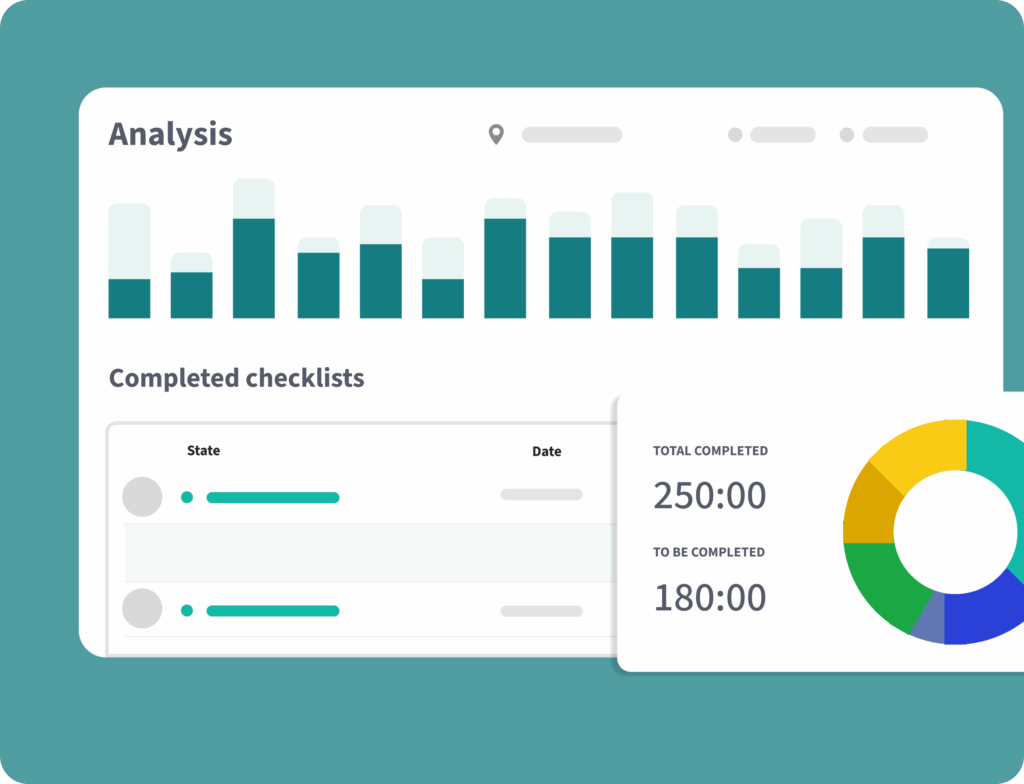
The value of data is not collecting information for the sake of it. Nobody needs another digital graveyard full of records that no one opens. The value lies in using that data to make better, faster and more consistent decisions.
With Andy, teams work with clearer processes, better-informed managers and more reliable traceability. This does not eliminate every mistake — we are still in the real world, not a perfect model – but it does help reduce improvisation and detect risk signals earlier.
Preventing operational incidents means exactly that: no longer waiting for problems to become visible only when they have already grown too large.
From data to prevention
Every incident contains a clue. The question is whether the company has a system capable of capturing it, organising it and turning it into improvement.
When operational data is used well, errors stop being simple interruptions in the day-to-day. They become signals that help adjust processes, protect quality, improve compliance and support teams with more safety and less friction.
At Andy, we help food service operators move from reaction to prevention, with digital tools designed for real teams, real sites and operations that cannot depend on memory, paper or luck.
Do you want to prevent operational incidents before they become a bigger problem?
Discover how Andy can help you digitalise your processes, detect patterns and improve operational control across your sites.
